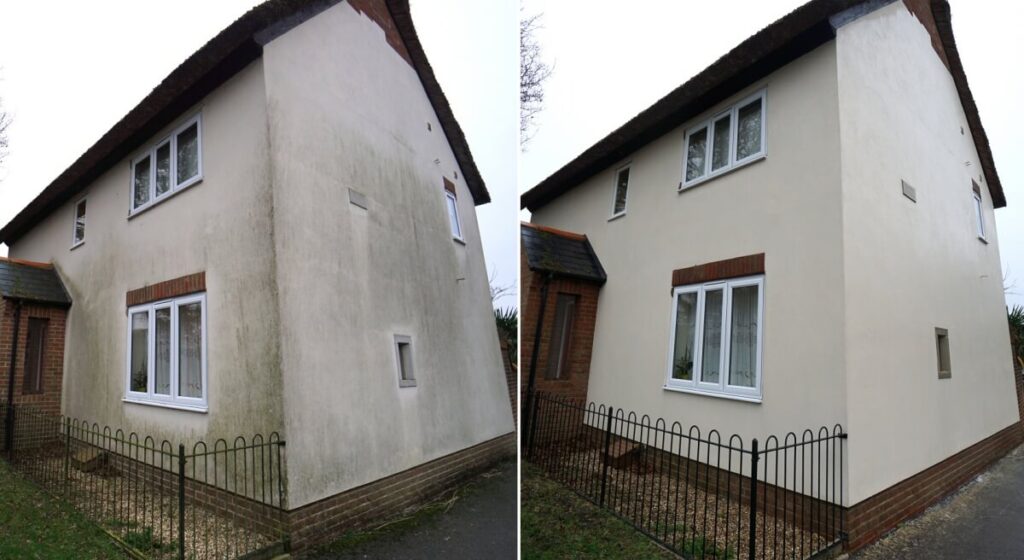

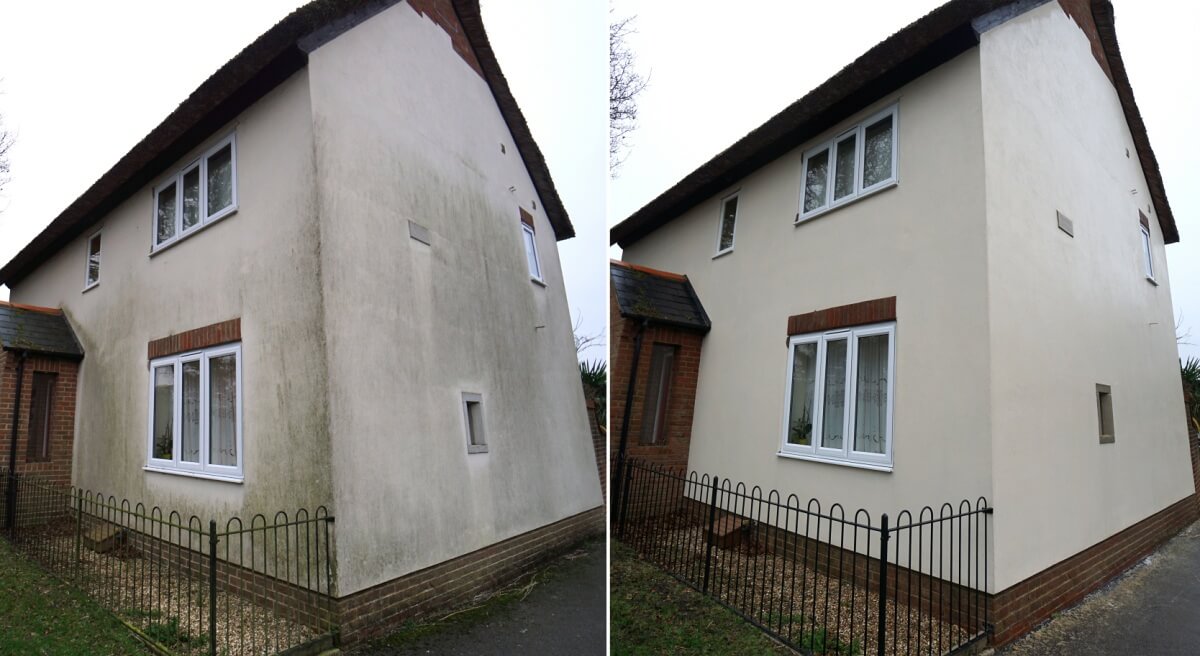
Over time, rendered walls can develop various deposits that affect the appearance of a building. Rain, pollution, moisture and surrounding vegetation often lead to dirt, green algae or darker staining on the surface.
These issues are common on both residential and commercial properties, especially in areas with a damp climate where exterior walls remain wet for longer periods.
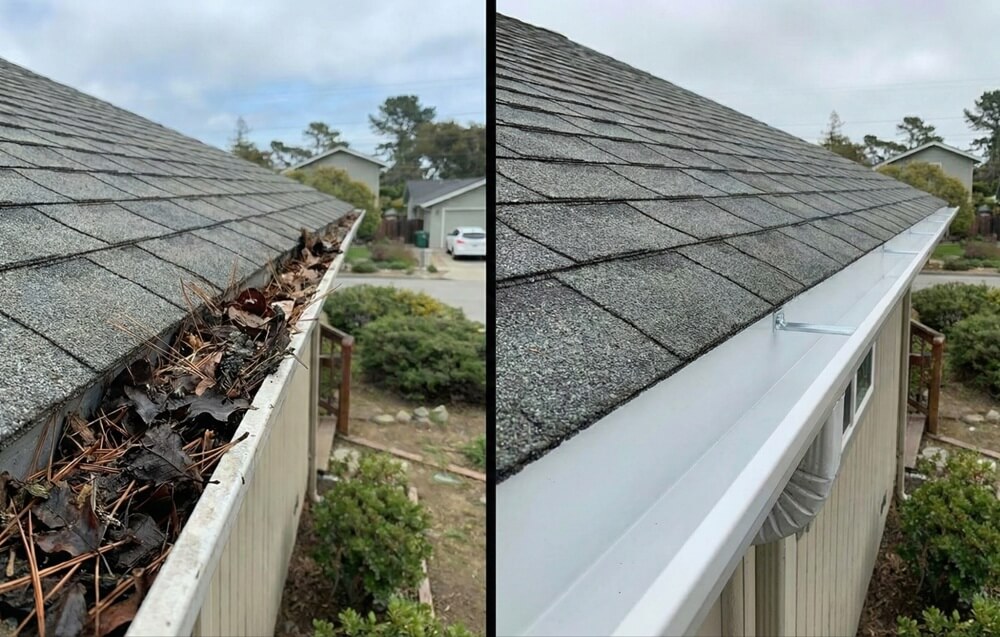
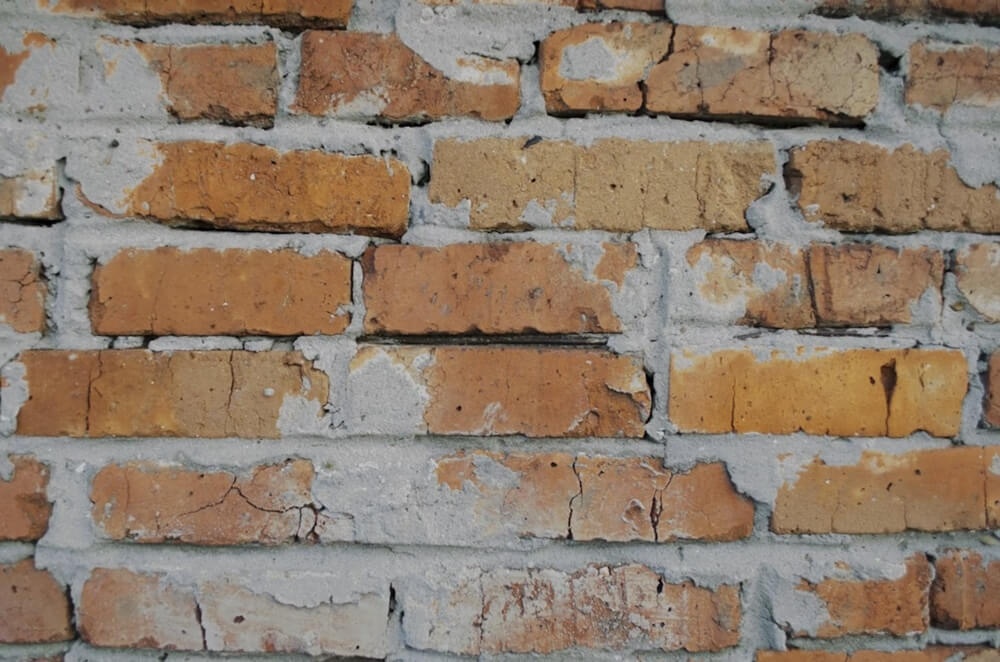
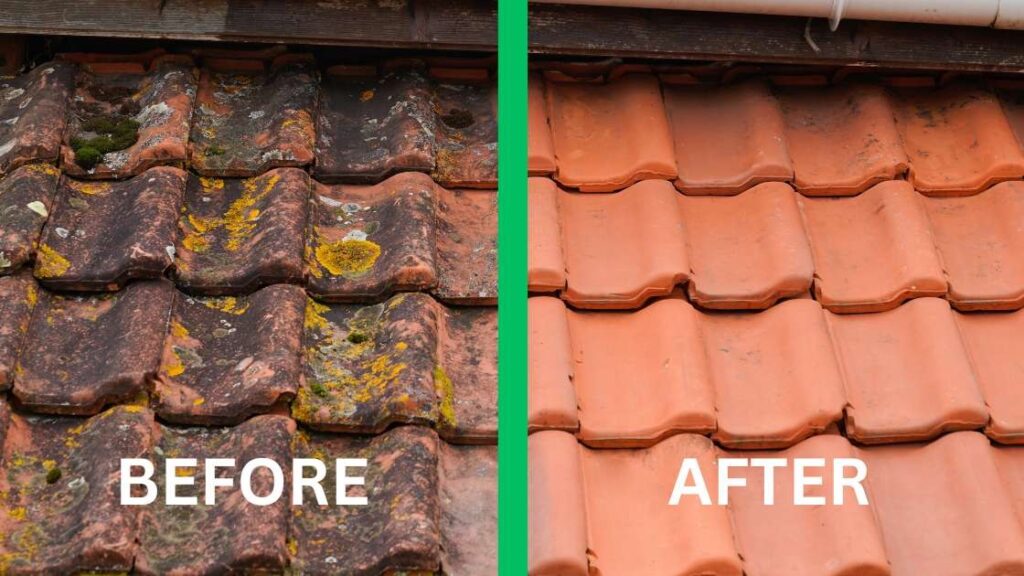
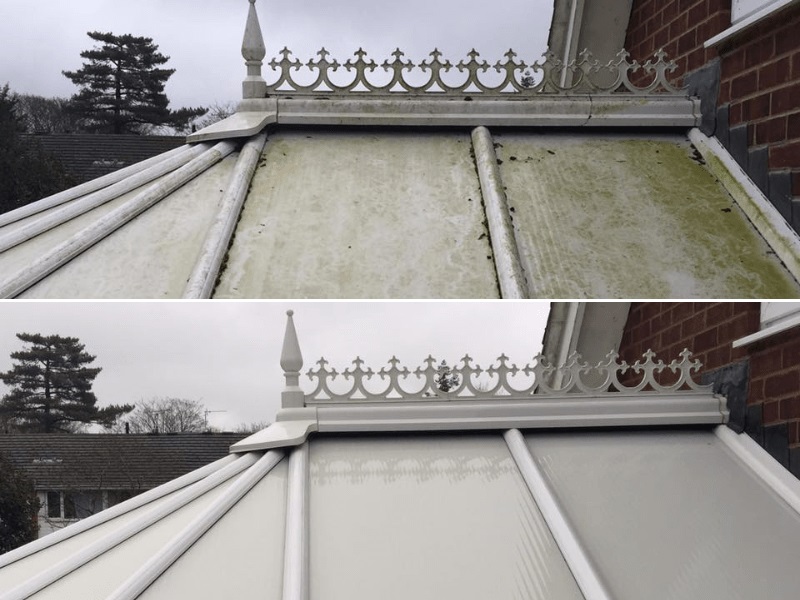
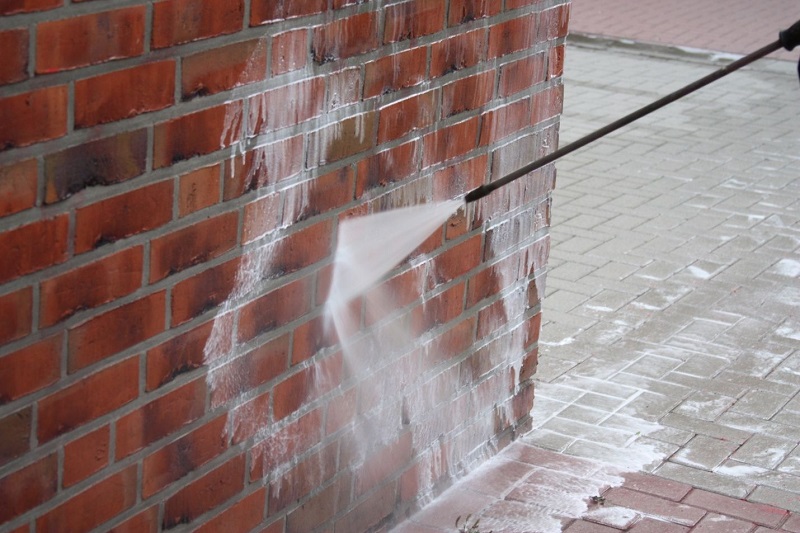
In areas with a wetter climate, these problems are seen quite frequently. The team at Bristol Blast Away regularly encounters them while carrying out exterior cleaning work on homes and commercial buildings, whether it involves render cleaning, brick cleaning or the cleaning of cladded facades.
Why rendered walls get dirty
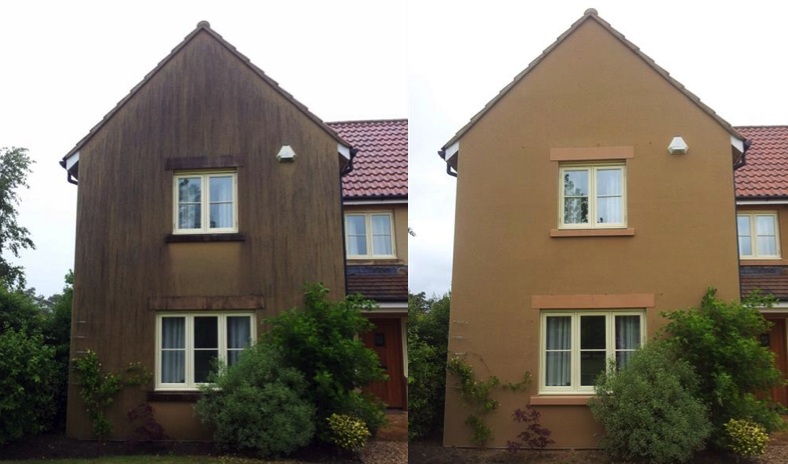
Rendered walls are constantly exposed to outdoor conditions, so it is normal for their appearance to change over time. Even when the render has been applied correctly and is of good quality, environmental factors can gradually lead to the build-up of dirt or visible staining on the facade.
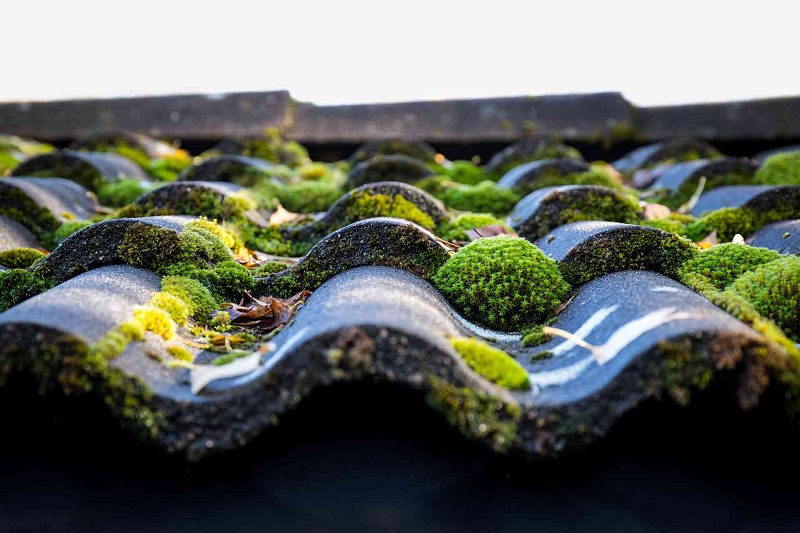
One of the most common factors is moisture, particularly on areas that remain shaded for long periods. In these conditions, algae or mould can begin to develop, usually appearing as green or darker patches on the surface. This is often seen on north-facing walls or in areas where air circulation is limited.
In addition, pollution and airborne dust can slowly settle on the surface of the render, especially in urban areas or near busy roads. Over time, these particles can make the facade look dull or uneven.
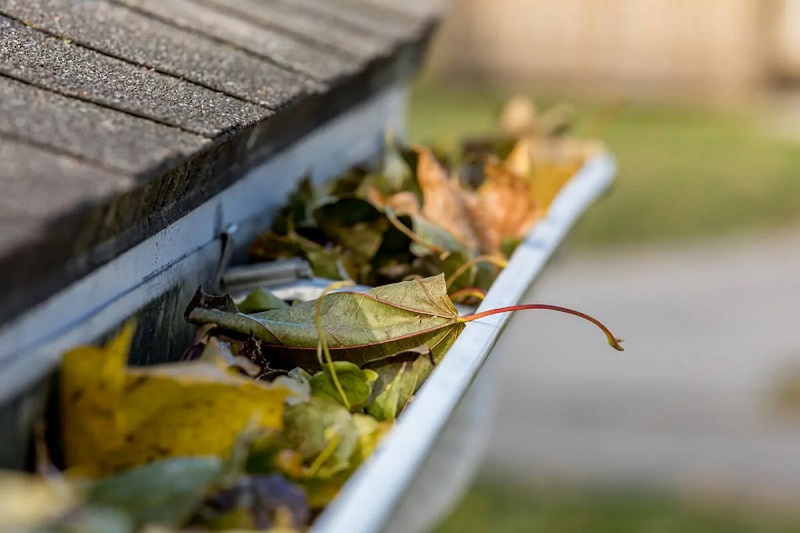
Another factor that contributes to staining is water running off roofs or gutters. If the drainage system is not working properly, water may leave marks on the wall or keep certain areas damp for longer periods, which encourages biological growth.
For this reason, rendered walls becoming dirty is a natural process that develops gradually on most buildings exposed to the elements.
During exterior cleaning projects, the team at Bristol Blast Away frequently comes across these issues on properties surrounded by vegetation or on buildings where walls remain shaded for much of the day.
Different ways to clean rendered walls
There are several ways to clean rendered walls, and choosing the right method depends on the type of render, the level of dirt and the overall condition of the surface. Some methods are simple and suitable for light staining, while others are more commonly used by professionals to remove algae, marks or more stubborn build-up.
Below are some of the most commonly used cleaning methods.
Manual cleaning
Manual cleaning is one of the simplest methods and can be suitable when the dirt is only superficial. It usually involves using a soft brush, water and a mild cleaning solution to help loosen and remove dirt from the surface of the render.
This method can work well for small marks or for general maintenance of the facade. However, it should be done carefully to avoid excessive scrubbing, which could damage the texture or protective layer of the render.
Low-pressure washing
Another commonly used method is low-pressure washing. This involves using a gentle stream of water to remove dirt and surface build-up without applying too much force to the render.
The pressure should always be kept low, as high pressure can damage the render or force water into the material. For this reason, the method needs to be used carefully, particularly on older or more fragile surfaces.
Soft washing
Soft washing is a professional cleaning method that uses very low pressure combined with specially formulated cleaning solutions. These solutions are designed to remove algae, mould and other biological growth that can develop on exterior surfaces.
Rather than relying on pressure to remove dirt, soft washing works by breaking down the deposits, allowing the surface to be cleaned effectively without damaging the render. For this reason, it is often considered one of the safest methods for cleaning delicate facades or surfaces affected by algae.
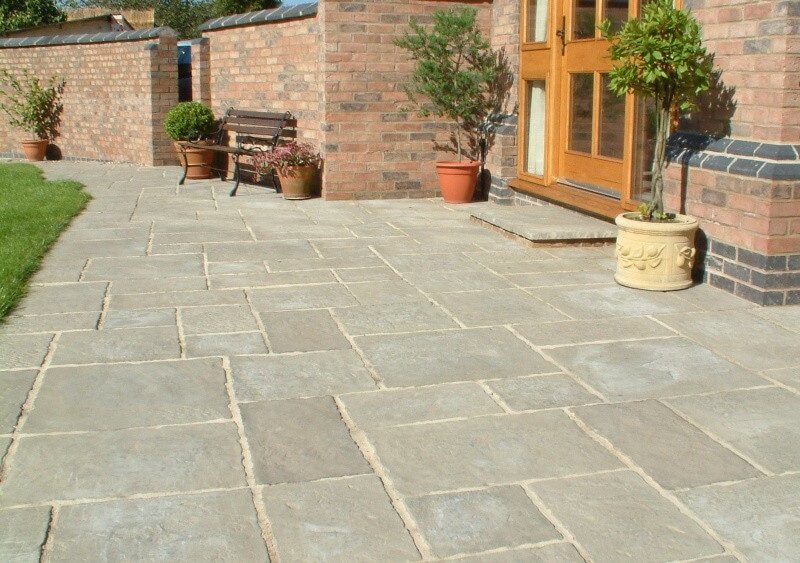
Depending on the type of surface, different cleaning methods may be required. For example, rendered walls are often cleaned using soft washing, while other exterior materials such as brickwork, natural stone or metal cladding may require different techniques.
If the rendered walls of your property have persistent staining or algae growth, a proper assessment can make a real difference. The team at Bristol Blast Away can inspect the surface and recommend the most suitable cleaning method.
Contact us to arrange a property assessment in Bristol and the surrounding areas.
Step-by-step: how to clean rendered walls
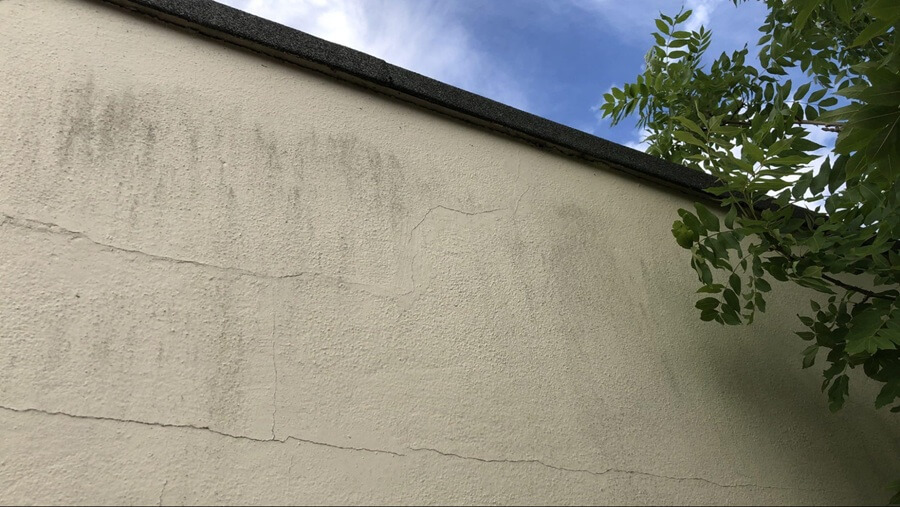
Cleaning rendered walls should be done carefully to avoid damaging the surface. Although the process may seem straightforward, it is important to follow a few basic steps to remove dirt without affecting the render layer. Below is a general approach that can be used for routine facade maintenance.
Remove loose dirt and debris
The first step is to remove any loose surface dirt. Dust, cobwebs, leaves and other light debris can usually be cleared using a soft brush or a broom with gentle bristles.
This step helps remove particles that could otherwise spread across the surface during washing and makes the cleaning process more effective. In many cases, a large portion of the visible dirt can be removed even before applying water or cleaning solutions.
Treat algae or mould if present
If green algae, dark staining or signs of mould are visible on the surface, it is recommended to apply a treatment designed for biological growth. These products are formulated to break down algae and mould before the wall is washed.
The solution is usually applied directly to the affected area and left to work for a short period, following the product instructions. This step is important because simply washing the wall with water does not always remove these organisms completely.
Gently wash the surface
After treating the deposits, the surface can be gently washed using clean water or a cleaning solution suitable for render. The washing should be done with low pressure or a soft brush to avoid damaging the render.
It is recommended to work in small sections, cleaning the wall gradually. This helps maintain better control over the process and reduces the risk of leaving marks or uneven areas on the surface.
Rinse the wall
The final step is to rinse the wall thoroughly to remove any remaining cleaning solution or loosened dirt. This can be done using clean water applied gently across the surface.
Proper rinsing helps prevent streaks and leaves the facade looking more even. Once the process is complete, the wall should be left to dry naturally.
Can pressure washing damage render?
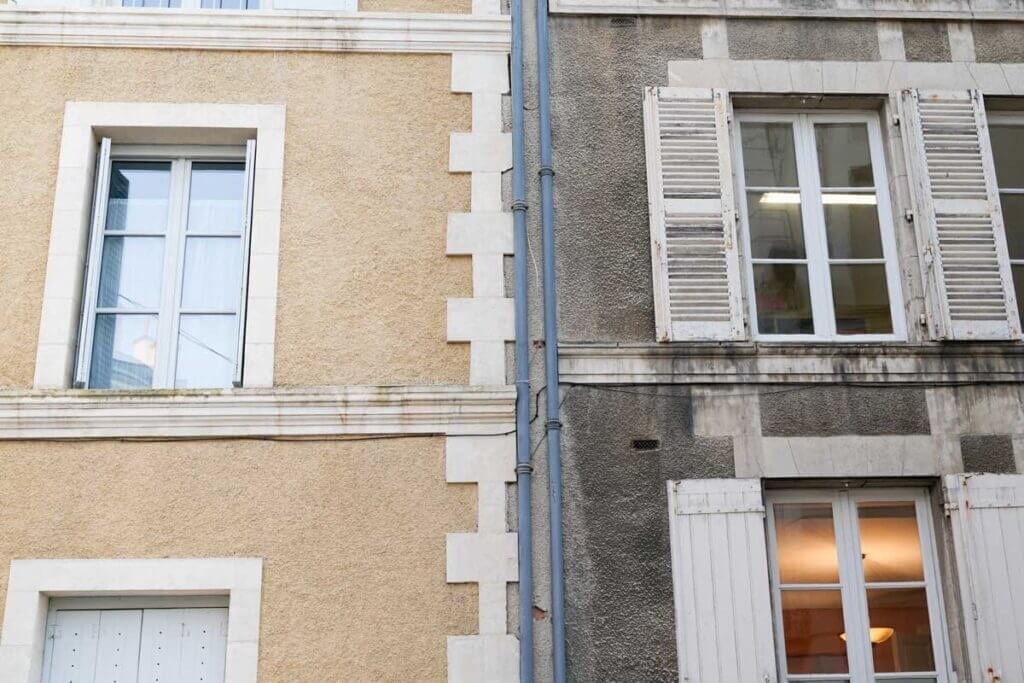
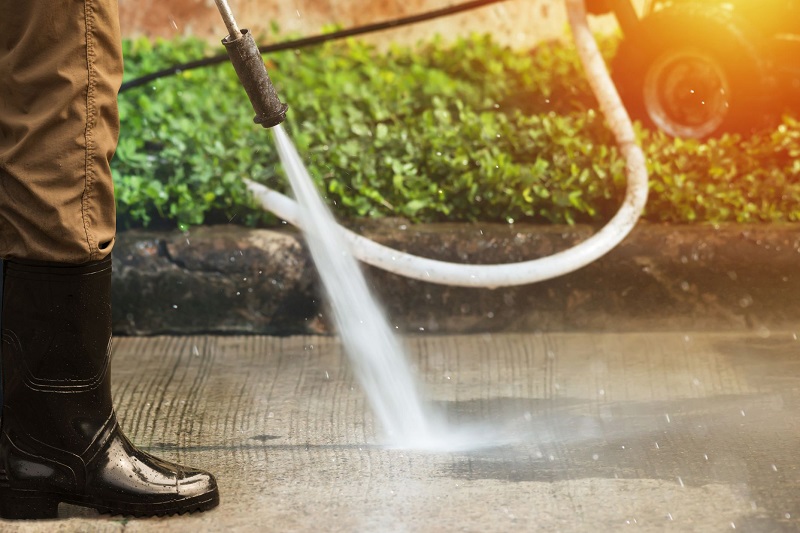
Using a pressure washer may seem like a quick solution for cleaning rendered walls, but high pressure can damage certain types of render. Exterior render is designed to withstand weather conditions, but not always strong jets of water applied directly to the surface.
One of the main risks is damage to the surface layer. High pressure can affect the texture of the render or remove the finishing layer, which can make the wall more vulnerable over time.
A powerful jet of water can also cause water to penetrate into the material, especially if there are small cracks or already weakened areas. In some cases, this may lead to damp issues inside the wall or further deterioration of the render.
Another risk is sections of render becoming loose or starting to flake, particularly on older surfaces or decorative render finishes.
In certain situations, low-pressure washing can be used safely, but only if it is applied carefully and adjusted to suit the type of surface. For this reason, it is important to choose the cleaning method with care to avoid damaging the facade.
Because of these risks, many professional exterior cleaning companies prefer low-pressure or soft washing methods when working on rendered surfaces. In projects carried out by Bristol Blast Away, assessing the condition and type of surface is always the first step before selecting the most suitable cleaning method.
Common mistakes when cleaning render

Cleaning rendered walls should be done carefully, as certain mistakes can damage the surface or lead to uneven results. Below are some of the most common problems that occur when render is cleaned using the wrong methods.
Using too much pressure
Using a high-pressure washer can damage the texture of the render or remove the finishing layer. In some cases, a strong jet of water can even cause sections of the render to come loose.
Using harsh chemicals
Some cleaning products may be too strong for rendered surfaces. These can discolour the material or damage the protective layer of the render.
Scrubbing the surface too aggressively
Hard brushes or excessive scrubbing can scratch or wear down the texture of the render. Instead of improving the appearance of the facade, this may leave visible marks on the wall.
Cleaning without treating algae or mould first
If biological growth is not treated with a suitable solution before washing, it may return quickly. Treating it beforehand helps remove the root cause, not just the visible staining.
How often should rendered walls be cleaned?
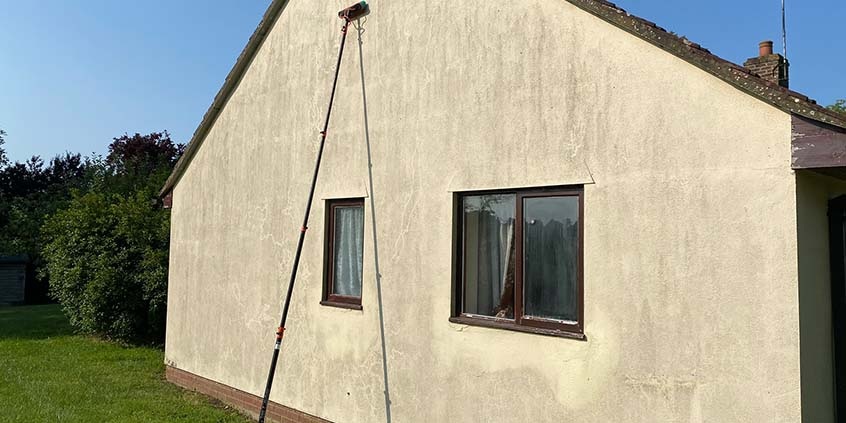
How often rendered walls need to be cleaned depends on several environmental factors. In general, most properties benefit from cleaning every one to two years to maintain the appearance of the facade and prevent deposits from building up over time.
However, the exact timing can vary depending on the conditions around the building. For example, in damp climates or on north-facing walls, algae and mould may develop more quickly. In these situations, cleaning may be needed more frequently to prevent staining from spreading across the render.
Properties located near trees, vegetation or shaded areas can also retain moisture more easily, which encourages biological growth. In urban environments, pollution and airborne dust can gradually accumulate on the facade as well.
When it may be better to call professionals
In many cases, light dirt on rendered walls can be removed using simple cleaning methods. However, there are situations where DIY cleaning may not provide the desired results or could even pose a risk to the surface of the facade.
For example, persistent algae or mould staining can be difficult to remove without treatments specifically designed for biological growth. If these deposits are not dealt with properly, they can quickly return even after the wall has been washed.
High or hard-to-reach facades can also make the cleaning process more difficult and potentially unsafe. In these situations, suitable equipment is often required to access all areas of the wall without damaging the surface.
Professional help may also be recommended when the render is older, fragile or already showing small signs of deterioration. Using the wrong method, such as excessive pressure or unsuitable cleaning products, can worsen the condition of the surface.
In addition, when dirt and staining have built up over a long period of time, more specialised equipment and cleaning techniques may be needed to achieve a consistent result.
In situations like these, contacting a professional exterior cleaning team can be the safer option. Companies such as Bristol Blast Away use cleaning methods suited to each type of surface, helping remove dirt and biological growth without damaging the render.